Strategic Financial Building Today. Securing Tomorrow.
Overview
🏠 Dashboard
👤 Personal Financial Checkup
🗂️ If Something Happens to Me
Investment
🎯 Investment Goal Planner
📊 Bond Value Check
📊 Fund Choice Planner
⚠️ Borrow-to-Invest Risk
Protection
📈 Savings by Age
🏠 Home & Life Combo
🛡️ Life Insurance Needs
♿ Income If I Can’t Work
Debt & Savings
💳 Debt Payoff Planner
🏦 Registered Accounts
🧮 How Much Will My Pension Be?
Business
🔑 Key Person Impact
🤝 Partner Exit Plan
Connect
🎯 About Your Advisor
📩 Book a Conversation
🔎 Find a Professional
▶️ YouTube
💜 Support Platform
📱 Mobile App
📰 News & Updates
For Professionals
🎓 Licensing & Practice Building
🔐 To Better Serve You
Please confirm you are not a robot and tell us about yourself so we can personalise your experience.
👋 Welcome, Fellow Advisor!
Tell us about yourself below. I will review your application and, if it's a fit, set up your professional profile so that client inquiries using your branded link come directly to you.
✅ You can use all 13 free tools right away. Your professional profile goes live once I have reviewed and approved it.
Please do not include confidential information here (account numbers, SIN or SSN, health details, detailed financial figures). Keep that for your conversation with the professional.
If you arrived through a professional's link, this message goes to that professional only.
By continuing you agree that Strategic Financial Building stores your name and contact details so we can reach you. If you arrived through a professional's link, they receive a copy of your contact details too. Your financial analysis never leaves your browser. See the Terms of Use.
🚀 Optional Professional Features
You already have free access to every tool. Below are the paid features available if you want a branded, client-facing version.
✅ Your Free Access Includes: All 13 financial planning modules · All 40+ calculations · Use in client meetings
⭐ Professional Plan
$29 /month
Branded PDF client reports with your name
Your own contact dashboard — leads come to YOU
Your name and photo on your platform version
Client follow-up tracking and notes
Priority support from Azeez directly
🏢 Enterprise Plan
Custom Pricing
Full white-label for your firm
Multiple advisor accounts
Custom branding and domain
Region:
FinWise
FinWise
Powered by Strategic Financial Building
Building Today. Securing Tomorrow. Empowering Generations.
A free tool that helps you identify the gaps in your financial plan, built on the standard calculations advisors use, with the sources shown under each tool. LLQP licensed & CSC certified, independent of any single provider. Use the calculators below on your own, or book a conversation if you want to talk through what you find.
🎓 LLQP Licensed
📜 CSC/CSI Certifiied
🇨🇦 Canadian Regulatory Compliant
▶️ YouTube Channel
💜 Support This Platform
📱 Mobile App — Coming Soon
📰 News & Updates
Platform Modules
13
+1 features coming soon
Calculations Available
40+
Live math engine
Target Users
4
Family · Business · Corp · Pro
Life Insurance Gap
Nearly 1 in 3
Canadian adults report a life insurance coverage gap (LIMRA, 2024)
Total Visits
—
Since first launch
This Session
—
Modules explored
Most Used Module
—
By visit count
Last Visit
—
Timestamp
Quick Start
Choose a module to begin
New here? Start with the Personal Financial Checkup below. It takes about five minutes and gives you a personalized priority list showing exactly which FinWise tools matter most for your situation, so you're not guessing where to go next. Each tool works on its own, so you'll enter your numbers again as you like in whichever ones you open, on your own terms. Nothing you enter anywhere on FinWise is collected or stored, it stays in your browser and is yours alone.
Prefer to watch it explained first? Pick the episode that matches your situation, both under 25 minutes.
FOR INDIVIDUALS & FAMILIES
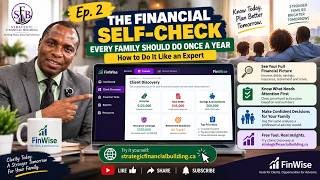
Ep. 2 — The Financial Self-Check Every Family Should Do
Build your financial profile — risk tolerance, life stage, goals
🎯
Investment Goal Planner
How much to invest today to reach your future target
📊
Fund Choice Planner
Build your optimal hybrid portfolio — protection + growth + fee audit in one tool
📈
Savings by Age
See where you stand on the wealth-vs-responsibility curve
⚖️
Home & Life Combo
Compare the real cost of a mortgage against building wealth with UL
🛡️
Life Insurance Needs
Find exactly how much life insurance coverage you actually need
🤝
Partner Exit Plan
Fund your shareholder agreement and protect your business
💳
Debt Payoff Planner
See how accelerated payments, shorter amortization and refinancing slash lender interest
🏦
Registered Accounts
RRSP, RESP, TFSA and FHSA: maximize CESG grants and tax-sheltered compound growth across all registered accountsIRA, Roth IRA and 529: maximize tax-advantaged growth across retirement and education savings
🧮
How Much Will My Pension Be?
See what CPP, OAS, GIS, your workplace pension and savings could pay, and what is missingSee what Social Security, your workplace pension and savings could pay, and what is missing
Regulatory Disclosure: FinWise Advisor is operated by a licensed advisor holding LLQP Licensed · CSC/CSI Certified. All calculations are for illustrative and educational purposes. This platform does not constitute a formal financial plan or binding advice. All insurance product illustrations are subject to underwriting approval. Investment projections are based on assumed rates and do not guarantee future performance. Always consult a licensed professional before making financial decisions.
Module 1
Personal Financial Checkup (KYC)
4 steps to a full picture — life protection, income protection, emergency readiness, retirement, and investment risk. Your complete strategy in one place.
1
Personal
2
Protection
3
Savings
4
Results
👤 Personal & Income Information
Separate from Dependants above — used only to check whether an RESP is open. The Canada Education Savings Grant is payable on contributions made up to the end of the year a child turns 17, so count any child still inside that window.Separate from Dependants above — used only to check whether a 529 plan is open. A 529 plan has no beneficiary age limit, so count every child regardless of age.
Everything you own (home, vehicles, accounts, rental property, business) minus everything you owe. Include your TFSA, RRSP and other accounts here, even though you enter them again later. FINWISE subtracts the accounts you list so that nothing is counted twice, and shows what is left as your home, vehicles and other assets. Never include insurance coverage, a death benefit is not an asset you can use while living.
Investable assets used in the calculations:$0
🏢 Business Information
Required for a business analysis — this is the business's own revenue, separate from your personal Annual Gross Income above. Left blank, Key Person, Buy-Sell, and Corporate Wealth Transfer cannot be calculated.
A reasonable estimate is fine — used for Key Person and Buy-Sell coverage amounts.
How much revenue would be at risk if the key person died or became disabled?
Corporations can use retained earnings for tax-advantaged wealth transfer via corporate-owned life insurance
Alberta 2026: small business rate 11% (9% federal + 2% Alberta), general rate 23%. Other provinces differ, so change this to your own rate.
How the business figures are worked out: for key person cover we use two years of the revenue that depends on one person, or half of the business value, whichever is larger. A buy-sell agreement sets out how the share of a partner who dies or leaves is bought, and it is often funded by life insurance on each partner. Business overhead cover uses an estimate that overhead is 35% of revenue, which is an assumption and you should replace it with your real figure when you speak to an advisor. The company profit comparison assumes personal tax of up to 45% when the money is taken out, and this varies by province and income. A corporate owned life insurance policy pays the company, and part of the payment can then be passed to shareholders tax free through the Capital Dividend Account. The details need your accountant.
🛡️ Life Insurance — Current Coverage
Include employer group life + any personal policies
For example a pension that continues to a surviving spouse, government survivor benefits, or their own earnings. This lowers the income your insurance would need to replace, so only include amounts you are confident would continue, and check them with the plan administrator or the government office. Leave at 0 if unsure. Do not repeat savings you entered elsewhere.
How the life insurance estimate works: we work out how much money, invested at 5%, would pay your family your yearly income from interest alone, so the money is never used up (your yearly income divided by 5%). This is the capital retention method from the LLQP course. It tends to give a high figure, because it assumes the income is needed forever. Your debts are added, then your insurance and savings are subtracted. The Life Insurance Needs lets you choose other methods, such as spending the money over a set number of years.
♿ Disability Insurance — Income Protection
Why this matters:About 1 in 5 Canadian adults, and 1 in 5 of those aged 25 to 64, live with a disability that limits their daily activities (Statistics Canada, 2017).About 1 in 4 of today's 20-year-olds will become disabled before age 67 (US Social Security Administration).
If you could not work tomorrow, how long could your family survive on savings alone?
From employer — usually 60–70% of salary, taxable
CPP-D average (new beneficiaries, Oct 2025): ~$1,235/mo, max $1,741/mo. EI sickness benefit: up to 26 weeks (extended from 15 weeks in Dec 2022), max $729/week — a short-term bridge, not a long-term replacement for personal DI.SSDI average (all disabled workers, 2026 COLA): ~$1,630/mo. SSI federal max: $994/mo (2026)
Honestly — how long before you could not pay the bills?
How the disability figure is worked out: we compare your monthly bills with the disability income you entered from work, a personal policy and the government. Insurers will not insure all of your pay, so the most that can be covered is about two thirds of your income (about 60% if you are self employed), and about 85% from all sources together. Cover through work usually stops if you leave the job, while a personal policy stays with you. Source: LLQP Sickness and Accident Insurance course (E312), Chapter 2.
💊 Critical Illness — Survival Benefit
Why this matters:
Critical illness insurance is built around four conditions insurers call the Big 4: heart attack, stroke, cancer, and coronary bypass surgery.
About half of heart attack victims are under 65, and 95% survive their first attack. About one in three Canadians will develop some form of cancer, and about 65% of them survive at least five years. About one in 20 Canadians will have a stroke before age 70, and about 75% of those survive it. Coronary bypass surgery accounts for a further 3 to 5% of all critical illness claims. (Source: LLQP Sickness and Accident Insurance course material, 2022 edition.)In the United States, the American Cancer Society's most recent report puts overall five year cancer survival at 70%, for cases diagnosed between 2015 and 2021. Heart attack and stroke remain common, survivable, and expensive to recover from.
Surviving is exactly why the coverage matters. It pays a lump sum precisely when treatment, recovery, and lost income begin, rather than forcing you to draw down retirement savings to get through it.
Lump sum paid on diagnosis of cancer, heart attack, stroke
How the critical illness figure is worked out: we suggest a lump sum equal to two years of your income, enough to cover treatment, time off work and extra costs without touching your retirement savings. Two years is a planning guide used in this tool, not a rule from an insurer. The health statistics above come from the source named in the box.
🚨Emergency Fund — TFSA
Why this matters: Without 3–6 months of expenses in a liquid account, any unexpected event forces you to borrow at high interest or cash in long-term savings.
The TFSA is Canada's most flexible emergency vehicle — growth and withdrawals are completely tax-free.A High-Yield Savings Account (HYSA) or Roth IRA is the ideal US emergency vehicle — FDIC-insured, liquid, and tax-advantaged.
2026 limit: $7,000/yr. Lifetime room (age 18 in 2009): up to $109,0002026 IRA limit: $7,500/yr ($8,600 if 50 or older), within income rules
How the emergency fund figure is worked out: we use six months of the monthly expenses you entered, and count your TFSARoth IRA plus any cash you hold outside registered accounts. Three to six months is a common planning range. The yearly limit shown is $7,000 for a Canadian TFSA (CRA, 2026) and $7,500 for a US Roth IRA (IRS, 2026). The Roth limit may be lower at higher incomes, so check the IRS rules.
🏦 Retirement — RRSP & Pension
Why this matters: With modern medicine, you may live 25–35 years past retirement. Without a plan, longevity becomes a financial risk — outliving your savings.
The RRSP grows tax-sheltered and every dollar contributed reduces your tax bill today.A Traditional IRA / 401(k) grows tax-sheltered and reduces your taxable income today. A Roth IRA grows tax-free with no RMDs during your lifetime.
Estimated current value. If you only know the yearly employer contribution, leave this blank.
Not sure? Work out your own pension with How Much Will My Pension Be?Your CPP and OAS statement is in your My Service Canada Account. If you leave this blank we use about $1,621 a month, the average new CPP pension at 65 ($858.34) plus the maximum OAS ($762.50).Your Social Security statement is at ssa.gov/myaccount. If you leave this blank we use $2,071 a month, the 2026 average for a retired worker.
How the retirement and savings figures are worked out: your savings are grown at 6% a year until the retirement age you enter, a planning assumption and not a promise. Each year in retirement we assume you can take 4% of the total, which is a common planning guide. We add the government pension you entered, or the average if you left it blank: about $1,621 a month for Canada (CPP average for new pensioners at 65, $858.34 in July 2026, plus the maximum OAS of $762.50 for ages 65 to 74, from canada.ca) or $2,071 for the US (the 2026 average retired worker benefit, from the Social Security Administration). OAS is reduced for higher incomes and needs enough years of Canadian residence. We plan through age 90. Your rental income, if any, is added as entered and kept at today's amount. The "usual target for your age" compares your savings with a multiple of your yearly income that rises as you get older. It is a rough guide that comes from this tool's life stage table, not a rule. Change the assumptions yourself in the Registered Accounts and Goal Finder calculators.
🧾 Everything Else You Own (optional)
Why this matters: Money held outside your TFSA and RRSPRoth IRA and IRA/401(k) still counts toward your emergency fund and your retirement, and rental income pays you without touching your savings. Enter only what is not already entered above, so nothing is counted twice. Leave blank anything that does not apply.
Chequing, savings, high interest savings and short term deposits.
What it is worth minus the mortgage on it. Not your own home.
After property costs and mortgage interest, before tax. Leave out of Annual Income above, it is added separately.
FHSA, LIRA, RESP.529 plan, HSA, other retirement accounts. Shown in your net worth picture, not counted in the calculations.
🏠First Home (FHSA) & Education Savings (RESP)Education Savings (529 Plan)
Why this matters:The FHSA combines an RRSP-style tax deduction with TFSA-style tax-free growth for a first home, and the RESP's 20% CESG grant is free government money on the first $2,500 contributed per child each year. Neither is used automatically — you have to open the account.A 529 plan grows tax-free for a child's education, has no federal contribution limit, and many states offer a state income tax deduction on contributions. It is not used automatically — you have to open the account.
About the home and education questions: the FHSA (First Home Savings Account) is a Canadian account for a first home. You can put in up to $8,000 a year and $40,000 in total, you get a tax deduction on what you put in, and withdrawals for a qualifying home purchase are tax free. The RESP is a Canadian education savings account where the Canada Education Savings Grant adds 20% of the first $2,500 you put in each year per child, up to $500 a year, to a lifetime maximum of $7,200 per child, on contributions made up to the end of the year the child turns 17. A US 529 plan grows tax free for qualified education costs and has no federal matching grant. Source: Canada Revenue Agency and Employment and Social Development Canada for the FHSA and RESP, IRS for the 529.
📜 Legal and Planning Basics (optional)
Tick what you already have in place. If you tick nothing and leave this alone, we skip it. If you tick "None of these or not sure", we list what to check. General information, not legal advice.
🧠 Investment Risk Profile
How the investment mix is chosen: your answers show how comfortable you are with ups and downs. Separately, we look at what your finances can handle, using the years until you retire, how many people depend on you, how steady your job is and how many months of expenses you have saved. We then suggest the more cautious of the two, because a mix you are comfortable with can still be too risky if you could not afford a loss. Matching a mix to both your comfort and your ability to take a loss is a standard step in Canadian and US advisor suitability rules.
📄
Export Complete Report as PDF
Includes your inputs, results, and recommendations · Branded with SFB logo · Free
Module 2 — Investment Analysis
Investment Goal Planner
Discover exactly how much to invest today — or how much you'll have tomorrow.
Present Value
Future Value
Dollar Cost Averaging
Required Return
🎯 Present Value Calculator
"I want $X in Y years. How much do I need today?"
2.5%
If checked, your target is inflated forward to a nominal future-dollar amount before finding what to invest today — so your goal keeps its real purchasing power.
6.0%
10 yrs
Investment Needed Today
—
Enter values to calculate
📊 Growth Projection
💰 Future Value Calculator
"I invest $X monthly for Y years. What will I have?"
7.0%
25 yrs
2.5%
Used to show your Real Rate of Return — what your money will actually be worth in today's purchasing power.
Future Portfolio Value
—
Enter values to calculate
Breakdown
Nominal vs. Real Return (Today's Purchasing Power)
📅 Dollar Cost Averaging Simulator
Invest a fixed amount every month. When the price is low your dollars buy more units, and when it is high they buy fewer. This model lets the market move up and down instead of assuming a smooth return.
20 yrs
7.0%
15%
Rough guide only, not a forecast: about 5% for a bond heavy mix, about 10% for a balanced mix, about 15% for a global stock fund, 20% or more for a narrow or aggressive fund.
Each press draws a different random market with the same average return and fluctuation.
The fluctuation slider does not change this choice. It still sets the range of random markets shown below.
Final Portfolio Value
—
Adjust sliders to see projections
Total Invested
—
Total Growth
—
Your Average Cost per Unit
—
Average Market Price
—
What the Ups and Downs Did to Your Purchases
Your Goal
📈 Portfolio Growth
🌊 The Market in This Example
The purple line is the price of one unit. The grey dashed line is the smooth trend at your average return. When the purple line is below the grey line, prices are low and your fixed amount buys more units.
🧺 How Many Units You End Up With
What Could Happen
Monthly Investing Compared With Investing It All at Once
Adjust sliders to compare.
Past results do not predict future results. This is an education tool, not personal investment advice.
How this is worked out (for those who want the method)
Each month your fixed amount buys units at that month's price. The smooth projection assumes the price rises by the same amount every month and matches the standard future value of regular payments. The yearly pattern repeats the same twelve monthly moves every year, scaled to the ups and downs you choose, and still earns your average return over each full year. The random markets are 1,000 simulated paths with your average return and your chosen ups and downs. The "weak" and "strong" figures are the 10th and 90th percentiles of those paths (1 in 10 did worse, and 1 in 10 did better) and the "typical" figure is the median. The median is lower than the average because gains and losses compound unevenly. These are teaching scenarios, since nobody can predict real monthly moves.
🧮 Required Rate of Return
"I have $X now and can add $Y/month for Z years. What annual return do I need to hit my goal?"
15 yrs
Required Annual Return
—
Enter values to calculate
🧭 Feasibility Check
Complete the form to see how realistic this target is.
Disclaimer: Present and future value calculations use standard compound interest formulas. Returns shown are illustrative and based on assumed rates. Actual investment returns will vary based on market conditions, product type, and fees. Past performance does not guarantee future results.
📄
Export Complete Report as PDF
Includes your inputs, results, and recommendations · Branded with SFB logo · Free
Module 3 — Investment Analysis
Bond Value Check
See what a bond is worth today, what it really earns you, and how much its price could move if interest rates change.
What a Bond Is Worth
Return and Rate Risk
Interest Owed When Buying
📉 What Is This Bond Worth Today?
What the Bond Is Worth Today
—
Enter bond details to calculate
🧭 What This Means for You
Complete the form to see what this means.
🔁 When Interest Rates Move
If Rates Go Up
Existing bonds are worth less, because new bonds pay more. Shorter-term bonds lose the least.
If Rates Go Down
Existing bonds are worth more, because they pay more than new bonds. Longer-term bonds gain the most.
If Rates Stay Put
The price stays close to face value and you simply collect the interest.
How this is worked out (for those who want the method)
The worth today is the present value of every interest payment plus the face value paid at the end, each discounted at the rate buyers can get elsewhere. When that rate is above the bond's own rate, the price is below face value (a discount). When it is below, the price is above face value (a premium). The "current yield" is the yearly interest divided by today's price.
📐 What Does This Bond Really Earn?
Enter the price the bond is selling for to see what you would earn each year and how much the price could swing if rates change.
Interest vs Today's Price
—
Yearly Return if Held to the End
—
Average Wait to Get Your Money Back
—
📖 What This Means for You
Enter bond details to see analysis.
Price change for every 1% move in rates: —
📊 What If Interest Rates Change?
The price this bond would sell for if rates moved up or down by the amount shown.
If Rates Change By
Quick Estimate
Price Would Be
Change in Price
How this is worked out (for those who want the method)
The yearly return if held to the end is the yield to maturity, found by solving for the rate that makes the bond's cash flows equal today's price. The average wait is the Macaulay duration, the present value weighted average time to receive the cash flows. The price change per 1% is the modified duration, which is the Macaulay duration divided by one plus the yield per payment period. The quick estimate uses modified duration, while the "Price Would Be" column reprices the bond at the new rate. The two differ more for bigger rate moves because price does not move in a straight line (convexity).
🧾 Interest You Owe the Seller
If you buy a bond part way between interest payments, you pay the seller the interest they have already earned.
Interest You Owe the Seller
—
Enter bond details to calculate
Total You Pay at Settlement
—
Quoted price plus the interest you owe the seller
📄
Export Complete Report as PDF
Includes your inputs, results, and recommendations · Branded with SFB logo · Free
Module 4 — Investment Analysis
Borrow-to-Invest Risk
See how far a price can fall before your broker asks for more money, and how much that would be.
Borrowing to Buy
Selling Borrowed Shares
⚠️ Your Borrowed Investment
50%
Price at Which Your Broker Asks for More Money
—
Enter your position details
📋 Your Numbers
How this is worked out (for those who want the method)
Your loan is the purchase value minus your own money. Your broker asks for more money once your share of the value (value minus loan) drops below the required share. That happens at the price loan ÷ (shares × (1 − required share)). Typical minimums under CIRO rules are below.
Use the slider above to try any of these. CIRO sets the exact steps and can change them, so confirm the current rules with your dealer.
⚠️Please be careful: Borrowing to invest makes gains bigger and losses bigger. You can lose more than you put in, and your broker can sell your shares without asking you first. This suits only people who can afford a large loss.
📉 Your Short Sale
You borrow shares, sell them, and hope to buy them back cheaper. You lose money when the price goes up.
50%
For shares priced $2.00 or more, CIRO rules call for about 150% of the shares' value to be held (the sale money plus a 50% cushion).
Price at Which Your Broker Asks for More Money
—
Enter your position details
📋 Your Numbers
🚨The loss has no upper limit: If you buy shares and they fall to zero, you lose what you put in. With a short sale a share price can keep rising, so your loss can be larger than your whole account. You also owe any dividends to the lender, and the shares can be called back at a bad time.
📄
Export Complete Report as PDF
Includes your inputs, results, and recommendations · Branded with SFB logo · Free
Module 5 — Protection Planning
Savings by Age
See how your savings compare with people your age, and what stands between you and the target.
📝 Your Situation
How this is worked out (for those who want the method)
The savings guide uses the milestones published by Fidelity Investments (United States): about 1 times your yearly pay saved by age 30, 3 times by 40, 6 times by 50, 8 times by 60 and 10 times by 67. Between those ages we draw a straight line. Fidelity assumes saving 15% of income from age 25, retiring at 67 and replacing about 45% of pre-retirement income, with no pension. These are US figures and a rough guide for Canadians, whose CPP and OAS pay a different share. The five life stages follow the life-cycle idea in the Canadian Securities Course (Volume 2, Chapter 26), which says age is a useful starting point for goals and risk, but not every client fits. The curve picture is an illustration of the idea, not a forecast of your own numbers.
📈 The Big Picture: Responsibilities Fall, Savings Rise
🧭 Where Your Savings Stand for Your Age
Enter your age, income, debts and savings above to see how your savings compare with people your age.
🪜 Five Stages of Life and What to Focus On
📄
Export Complete Report as PDF
Includes your inputs, results, and recommendations · Branded with SFB logo · Free
Module 6 — Protection Planning
Home & Life Combo
Compare what a mortgage costs you with what a permanent life insurance policy costs you, side by side.
You do not have to pick one. This tool shows what each costs and what each leaves your family, so you can see them side by side.
A house gives you a place to live and may grow in value. A permanent life insurance policy (Universal Life, or UL) pays your family tax free and can build savings. The cost of the insurance rises as you get older.
🏠 Mortgage / House Parameters
In Canada, selling your main home is normally free of tax on the gain. A US main home is free of tax on the first $250,000 of gain ($500,000 for a married couple filing jointly), and we use $250,000 here.
The starting number is only an example. Enter what similar homes near you rent for. Rentals.ca and CMHC publish current local averages.
💚 Universal Life Parameters
The first choice costs less over time, because the insurer covers less as your savings grow. The second choice costs more, but your family receives the savings as well.
6.0%
What the insurance costs at your age:
🏠 The House
VS
💚 Universal Life Policy
📊 Year by Year: Cost of the Insurance and Growth of the Savings
Year
Age
Chance of dying that year
Amount the insurer is covering
Cost of the insurance
Savings in the policy
What to notice: the cost of the insurance rises as you age, but it eventually falls because your own savings take over more of the cover. The year marked PEAK is when the insurance costs you the most. The year marked CROSSOVER is when your savings equal the coverage amount.
These are illustrations at the growth rate you chose and are not a quote or a guarantee. Real policy costs depend on your health, the insurer and the product.
How this is worked out (for those who want the method)
The mortgage payment is the standard loan payment for the price, down payment, rate and years you enter. "Rent avoided" is the rent you enter times the months. The house side shows what you keep after subtracting the cost of the loan and adding the rent you avoid. On the policy side, each year the insurer takes a cost of insurance equal to the amount it is covering times a chance-of-death rate for that age. The rates are rough approximations built from the shape of the CSO 2017 mortality table (the standard table used in Canada and the US for life insurance), not any insurer's real charges. For the first option the amount covered is the coverage amount minus your savings in the policy (the "net amount at risk"). For the second it is the full coverage amount. Your premiums, less that cost, grow at the rate you choose. In Canada the gain on a main home is generally free of tax (principal residence exemption), and a gain on other property is taxed on 50% of the gain at your rate.
📄
Export Complete Report as PDF
Includes your inputs, results, and recommendations · Branded with SFB logo · Free
Module 7 — Protection Planning
Life Insurance Needs
Find out how much life insurance your family needs, how much you already have, and how big the gap is.
📋 Your Financial Obligations
The first choice does not overstate the need when a spouse or partner has income of their own.
The years slider below applies to the first and third choices. The second choice assumes the money is never used up, so it gives the highest amount.
Your age is used to show how your needs may change over time.
The yearly income your family would lose. If you leave the two boxes below at 0, we use this whole amount.
If both boxes stay at 0, we use your full income above.
20 yrs
Life insurance can leave a gift to a charity without touching what you leave your family. Ask a licensed advisor how to set it up in your country.
How this is worked out (for those who want the method)
We add up what your family would need: the income they would lose for the years you choose, your debts, final costs, education and any gift. We then subtract the life insurance and savings you already have. What is left is the gap. The default method follows the "capital needs" and "capital drawdown" methods in the LLQP Life Insurance course (E311, Chapter 11): the yearly shortfall times the number of years, with no interest. The "forever" choice is the "capital retention" method: the yearly amount divided by a 5% return. The third choice treats the money as earning 5% while it is slowly used. Final costs default to $25,000, a planning figure you can change. For a gift to a charity, naming the charity's foundation as beneficiary pays it outside your estate; in Canada the estate can receive a donation tax credit and in the US an estate tax charitable deduction may apply.
Your Coverage Gap
—
Enter your details to calculate
📊 Needs Breakdown
💡 Recommendation
📄
Export Complete Report as PDF
Includes your inputs, results, and recommendations · Branded with SFB logo · Free
Module 8 — Income Protection
Income If I Can’t Work
See how much disability income you can insure, how much you need, and what to do if you could not work.
💰 Your Income Profile
Childcare + housekeeping + elder care + transport, etc.
🏠 Monthly Expense Budget
📊 How Much Disability Cover You Can Get and Need
Most you can insure each month
—
Your bills not covered by other income
—
Monthly Cover to Aim For
—
🛡️ Your Protection Plan
💡 What This Means for You
How this is worked out (for those who want the method)
Insurers pay a share of your income, not all of it. Long-term disability benefits are commonly 60% to 66.67% of gross pay, and the total from all sources (employer plan, personal policy, government) is generally capped near 85% of earnings. The most you can insure is your income times that share, less the benefits you already have. Your need is your monthly bills minus the other income you would still receive. The amount to aim for is the smaller of the two, since you cannot buy more than the insurer allows and there is no need to buy more than your bills. Source: LLQP Accident and Sickness Insurance course (E312), Chapter 2.
📄
Export Complete Report as PDF
Includes your inputs, results, and recommendations · Branded with SFB logo · Free
Module 8 — Business Protection
Key Person Impact
See what it would cost your business to lose the person it depends on most, and how much insurance would cover it.
If a key person in your business became unable to work, what would that actually cost the business? This calculator helps you see the number rather than guess at it.
The business owns the policy, pays for it and receives the payment. The key person has to agree to it, but they are not the one who is paid.
🏢 Business & Key Person Profile
Profit before interest, tax and write-offs for wear and tear (EBITDA). Your accountant can give you this number.
Recruiting, training, temporary staff, lost productivity during transition
18 mo
Leave this at 0 unless your accountant has given you the balance of the company's Capital Dividend Account. Profit kept in the company does not count.
How this is worked out (for those who want the method)
The suggested amount is the largest of three ways of sizing the cover. The first adds up what the loss would cost: the revenue lost during the recovery months you choose, the cost of recruiting and training a replacement, and the loans the bank could call. The second multiplies the person's yearly pay by 5, 6 or 7 depending on their age, and the third takes three years of the profit that depends on them. The second and third are rules of thumb used in this tool, not taken from a regulator or the course material, so treat them as cross-checks. The disability benefit shown is the person's monthly pay, to a maximum of about $15,000 a month, because key person disability benefits are generally limited to 100% of annual salary (LLQP Accident and Sickness Insurance, E312, Chapter 5). Premiums on a key person policy are generally not deductible, but they may be if a lender requires the policy as security for a loan (LLQP Life Insurance, E311, Chapter 8). A Capital Dividend Account (CDA) lets a company pay shareholders tax free the part of a death benefit above the policy's adjusted cost basis. Insurers also limit how much of the business the key person can own, from 10% to 50% depending on the insurer.
Life Insurance Your Business Needs
—
Complete the form to calculate
📋 How the Amount Is Worked Out
🎯 How to Set It Up
💡 What to Know
⚠️ What Could Happen With and Without Cover
📄
Export Complete Report as PDF
Includes your inputs, results, and recommendations · Branded with SFB logo · Free
Module 9 — Business Protection
Partner Exit Plan
See how much insurance it takes to fund the buyout of a partner who dies, so their family is paid and you keep the business.
If a business partner dies or can never work again and you have no funded buy-sell agreement, their share can pass to their family, so a spouse or relative could become your co-owner.
A buy-sell agreement funded by life and disability insurance is one way to plan for this. It lets the surviving partner buy the share, and the family receives a fair price in cash. Work through whether it suits you with your lawyer and accountant.
🏢 Business & Shareholder Structure
Ask your accountant which multiple fits your industry. The value is your yearly profit times this number.
Leave this at 0 unless your accountant has given you the balance of the company's Capital Dividend Account. Profit kept in the company does not count, so we do not work it out for you.
Total Life Insurance Needed
—
Enter business details above
📋 Cover Needed for Each Owner
Owner
Share
Value of the share
Life insurance
Disability buyout
🎯 How to Set It Up
🏛️ Tax Points
⚖️ What Happens in Three Cases
No agreement
The share passes to the partner's family. They become co-owners, and they may want to sell quickly. The business could be sold cheaply or damaged.
Agreement, but no money set aside
You have the right to buy the share but no cash to do it. You would have to pay from business profits over time, and the family waits for its money while the business is under strain.
Agreement with insurance
The insurance pays, the surviving partner buys the share at the agreed price, and the family receives the cash. The change of ownership is smoother.
⚠️Please note: A lawyer must draw up the buy-sell agreement and your accountant should review it. The insurance has to match the agreement. Larger companies may also need other tax planning. Contact us if you want help working through your own case.
How this is worked out (for those who want the method)
The value of the business is the figure you enter, or your yearly profit (EBITDA) times the multiple if you choose the formula. Each owner's share is that value times their ownership percentage. The life insurance needed for each owner equals the value of their share, reduced in a company by their part of any Capital Dividend Account balance you enter. The disability buyout assumes 70% of the share is bought over 5 years, a planning assumption that your agreement may change. When each partner owns a policy on the other, the premiums are paid personally from after-tax money. When the company owns the policies, the premiums are paid by the company and the part of the death benefit above the policy's adjusted cost basis is added to the company's Capital Dividend Account, which can be paid out to shareholders tax free (LLQP Life Insurance, E311, Chapter 8). Retained earnings do not add to that account.
📄
Export Complete Report as PDF
Includes your inputs, results, and recommendations · Branded with SFB logo · Free
Your Independent Advisor
Strategic Financial Building
Building Today. Securing Tomorrow. Empowering Generations.
"I spent close to a decade in academic science — first as a university lecturer, then promoted to reader at my home university, then as a visiting professor at the University of Alberta after relocating to Canada. My research was in computational and physical chemistry, and I published more than 70 peer reviewed articles in drug design and vaccine development. In 2026 I completed a further degree in computer science at the University of Alberta, and I hold the LLQP and CSC licenses used across Canada's insurance and investment industry. FinWise is where those three backgrounds meet — the discipline of laboratory research, the ability to build software, and the regulatory grounding from licensing — pointed at one plain question: where are the gaps in your financial plan?"
"I hold my insurance and investment licensing independently, which means I'm not tied to any one company. I have access to multiple providers across Canada and the USA, so anything I model reflects what genuinely fits your situation rather than what one company sells."
🔬
Computational Chemistry Researcher
Close to a decade in academic science · 70+ published research articles in drug design and vaccine development
💻
Computer Scientist — University of Alberta, 2026
Modern technical training built directly into how this platform works
📜
LLQP Licensed · CSC/CSI Certifiied
Fully credentialed in insurance and Canadian securities — regulated and compliant
🧭 For Clients — The Independent Advantage
Most advisors are tied to a single company's products. I am not. Through my independent licensing, I have access to Canada and the USA's major insurance and investment providers — Ivari, Manulife, Equitable Life, TD, Industrial Alliance and more — so any illustration you see here can be built around what fits your situation rather than one company's shelf.
✦Business Layer — Key person, buy-sell, corporate UL
✦Legacy Layer — Estate planning, wealth transfer
Have a question about your own numbers?
FinWise is free to use on your own. If you would rather walk through your results with someone, you can book a 20 minute conversation — there is no cost and no pressure to implement anything through me.
Protect your family
If Something Happens to Me
A free Asset and Document Sheet. List where things are, who to call and what you want your family to know, save your progress and come back later, then download it as a PDF to keep or to share with a professional.
🔒 Private by design
This sheet is built inside your own browser. Nothing you type is sent to us or stored by us. When you close or refresh this page, what you typed is gone unless you saved it, so before you leave either save your progress file (CSV) to continue later, or download your PDF. Both files go to your own device. After that they are yours: keep them private, or share the PDF with your lawyer, accountant or advisor if you choose. A progress file is plain text that anyone who opens it can read, so on a shared or public computer delete it when you are done.
What this is, and what it is not
This is a guide to help your family and executor find things quickly. It is not a will, not a legal document, and not legal, tax or financial advice. Signing it does not change who inherits from you. Your will, your beneficiary designations and joint ownership decide that, and the rules differ by province and state. Treat it as a starting point for a conversation with a lawyer. Please do not enter passwords, PINs, security answers or full account numbers. The sheet has no place for them, on purpose.
Take your time, you can do this in stages
Fill in what you know today and save your progress as a CSV file. Come back later, load that file and carry on where you stopped. You can also open the file in Excel or Google Sheets and type in the Value column, then load it back here. A saved blank file is a ready made worksheet to fill in.
The PDF has a signature line with your printed full name. Print it or sign it on screen after you download it, and sign and date it again whenever you update it. Reviewing it once a year is a good habit.
Your PDF should now be in your downloads. Check that it opened and is saved on your device, because this page keeps nothing. Next steps: tell your executor where it is kept, take it to your lawyer when you update your will, and review it once a year.
FINWISE shows you what to look into. For wills, tax and business structure you need a lawyer or an accountant. Choose a listed professional near you, or contact us and we will help you find one.
These are paid listings, not recommendations or endorsements. Strategic Financial Building does not give legal, tax or financial advice and does not choose professionals for you. Professionals subscribe for a flat fee and are not charged per client. Always confirm that a professional is licensed and in good standing with their provincial, state or professional regulator before you hire them.
Not sure, or nobody listed near you?
You can contact Strategic Financial Building, the owner of this platform, and we will help you work out who to speak with. This is not a paid listing. Strategic Financial Building's principal is a licensed financial professional, not a lawyer or an accountant.
Get in Touch
Book a Personal Conversation
Whether you are a family, business owner, or professional — let's find 20 minutes to talk. No obligation. No product push. Just clarity.
Please do not include confidential information in this message. Do not enter account numbers, SIN or SSN, health details or detailed financial figures. Keep those for your conversation with the professional, once you are in touch.
Thank You!
Your information has been saved. I will personally reach out within 24 hours to schedule our conversation. Looking forward to it.
Continue exploring while you wait:
Strategic Financial Building
Building Today. Securing Tomorrow. Empowering Generations.
Independent, licensed financial advisor. Serving clients across Canada and the United States. Specializing in multi-layer wealth protection for families, startup business owners, professionals, and corporations.
📊 CSC/CSI Certifiied — Canadian securities & investments
🔬 Ph.D., Computational Chemistry — nearly a decade in academic research
🔓 Independent — not tied to any single provider
📋 Provider Access
Because I am independently licensed, I am not limited to one company's products:
IvariManulifeEquitable LifeIndustrial AllianceEmpire LifeCPPSocial SecurityTDBMO+ More
This is disclosed so you understand there is no single company steering what you see modeled on this platform.
For Financial Professionals — Separate From FinWise
Building a Licensed Practice
This page is about a separate path: becoming a licensed financial professional and building your own practice. It is not part of the free FinWise tool, and nothing on this platform requires it.
"This is a business you build and own on your own license — not a job with FinWise."
Low startup cost, access to Canada and the USA's established financial providers, and income tied to the value you create. I mentor a small group of licensed professionals through my own independent network of provider relationships. If you are already exploring licensing, here is what the path and the economics actually look like.
🏗️
Your Own Practice
You operate as an independent contractor on your own license, so growth pace and schedule are yours to set.
💰
How Compensation Works
Personal production from clients you serve directly. Override income if you mentor other agents who join. Residual income from policy renewals and trails.
🎓
Mentorship From Day One
Field training and guidance grounded in my own academic, technical, and financial background.
👥 Who Is This For?
🎓
Students — Build your business before graduation. Start now, go full time on your terms.
💼
Employees — Start part-time alongside your job. Transition when you are ready.
🛠️
Self-Employed — Add a scalable, passive income stream to what you already do.
🔍
Job Seekers — Own a business instead of waiting for a position that caps your potential.
🚀 3 Steps to Get Started
1
Get Licensed Obtain your LLQP license from the regulator — low cost, guided support every step of the way.
2
Establish Partnerships Connect with Canada and USA's top financial institutions through an established independent distribution network.
3
Get Trained and Launch Mentorship from top leaders. Field training. A community built for your success.
These are the same three steps I went through myself.
Want to talk about licensing?
Financial services is a large, established sector in the North American economy, built on helping families protect and grow what they have. If you would like to hear honestly what building a practice involves, reach out.
Analytics
Visitor Activity Log
Track how visitors are using the platform — stored locally in your browser.
📋 Detailed Activity Log
#
Timestamp
Module Visited
Session
Module 10 — Debt Management
Debt Payoff Planner
See how much interest your debt will cost you, and which choices keep more of that money in your family.
Pay Off Sooner
Year by Year
Is Switching Worth It?
Combining and Paying Off Debts
🏠 Mortgage Details
⚡ Ways to Pay It Off Sooner
Interest You Could Save
—
📊 Your Options Side by Side
Option
Payment
Total You Pay
Interest You Pay
Paid Off In
Interest Saved
📈 How Fast the Balance Falls
💡What the lender earns from you:Enter your mortgage to see how much interest you will pay.
How this is worked out (for those who want the method)
The regular payment is the level monthly amount that pays the loan off over the years you choose, with interest charged each month on what is still owed. Each option is run month by month (or at the payment frequency you pick) until the balance reaches zero. Interest saved is the baseline interest minus the interest for that option. Canadian fixed-rate mortgages normally compound twice a year, so your lender's payment can differ slightly from this monthly calculation. Use your lender's figure for the final decision.
📋 Your Mortgage Year by Year
Uses the numbers from the Pay Off Sooner tab.
Year
Owed at Start
Paid This Year
Went to the Loan
Went to Interest
Owed at End
Interest So Far
🔄 Is Switching to a Lower Rate Worth It?
What You Gain or Lose After Costs
—
Enter details to calculate
📋 Your Numbers
How this is worked out (for those who want the method)
Both mortgages are run to the end of their own terms. Interest on the current mortgage is its payment times its remaining months, minus the balance. The same is done for the new rate and term. Your gain is the interest difference minus the break fee and costs, and the break-even is those costs divided by the monthly payment saving. A rate that looks lower can still lose money if the fee is large, if you sell before the break-even, or if you stretch the payoff to many more years. Your lender can give the exact fee for your mortgage.
💡Moving credit card debt into your mortgage lowers the rate, but if you then pay only the smaller payment for many more years, you can end up paying more in total than if you had paid the cards off quickly. This tab shows both, using your mortgage numbers from the Pay Off Sooner tab.
💳 Other High-Rate Debts
Enter each debt you are thinking of combining. Leave the balance at 0 to skip a row. The rate on your latest statement is the one to use.
🥊 Which Debt to Pay First
Your mortgage stays as it is. Both ways use the same total each month. They differ only in which debt gets the extra money first, and each paid-off debt's payment moves on to the next one.
💡
⚖️ Three Ways This Could Go
Choice
Monthly Payment
Debt-Free In
Total Interest
⚠
📄
Export Complete Report as PDF
Includes your inputs, results, and recommendations · Branded with SFB logo · Free
Module 11 — Registered Accounts
Registered Accounts
RRSP · RESP · TFSA · FHSA.IRA · Roth IRA · 529 Plan. Maximize government grants, minimize tax, and let compound growth build generational wealth — using every tool the government gives you.
RRSPTraditional IRA / 401(k)
RRIF & AnnuityRMD & Annuity
TFSARoth IRA
RESP + CESG529 Plan
FHSA 🇨🇦 Canada Only
Compare All
📋RRSP CalculatorTraditional IRA / 401(k) Calculator
Contributions lower the tax you pay this year. The money grows without yearly tax until you take it out in retirement.
6.0%
40%
📈 Growth to Retirement
💡2026 RRSP Rules: Contribution limit is 18% of prior year earned income up to a maximum of $33,810 (2026). Deadline is 60 days after year-end (usually March 1 or 2). Must convert to RRIF or Annuity by December 31 of the year you turn 71. Use the RRIF & Annuity tab to plan your retirement income strategy and compare options.2026 IRA and 401(k) limits (IRS): You can put up to $7,500 a year in an IRA ($8,600 if you are 50 or older) and up to $24,500 in a 401(k) (plus $8,000 if you are 50 or older, or $11,250 at ages 60 to 63). Whether you can deduct IRA contributions depends on your income and whether you have a workplace plan. Withdrawals become required at age 73. The RMD & Annuity tab helps you plan the income. The IRS changes these limits most years, so check the current figures before you file.
Your RRSP must be converted by December 31 of the year you turn 71. The two main choices are a RRIF or an annuity. The right one depends on your health, how long you expect to live, how much market ups and downs worry you, and how much income you need.You must start taking money out of your Traditional IRA or 401(k) at age 73. The two main choices are to take those required withdrawals yourself, or to use part of the money to buy an annuity. The right one depends on your health, how long you expect to live, how much market ups and downs worry you, and how much income you need.
You can also do both: keep part invested for flexibility and use the rest to buy an annuity for income that is guaranteed for life.
📋Your RRSP at ConversionYour IRA / 401(k) at RMD Age
5.0%
30%
4.0%
Canadian avg: women 87, men 84. With modern medicine, plan for 90–95.US avg: women 81, men 76. With modern medicine, plan for 90–95.
💰 Annuity Parameters
GIC Annuity: insurer guarantees a fixed monthly income for a set term — predictable, no market riskFixed Annuity (MYGA): insurer guarantees a fixed monthly income for a set term — predictable, no market risk
5.5%
This rate is an assumption for planning. Annuity rates change often and depend on your age and health, so ask an insurer for a current quote before you decide.This rate is an assumption for planning. Annuity rates change often and depend on your age and health, so ask an insurer for a current quote before you decide.
50%
0% = all RRIF · 100% = all Annuity · 50% = split strategy0% = all RMD strategy · 100% = all Annuity · 50% = split strategy
📊 Year-by-Year Retirement Income
Age
RRIF Min. WithdrawalRMD Min. Withdrawal
RRIF BalanceIRA/401(k) Balance
Annuity Income
Total Annual Income
After-Tax Income
🎯 Strategy Recommendation
🛡️ Protected Income Strategy — Life-Cycle Guidance
💡RRIF or Annuity: How They DifferKeeping the Money Invested or Buying an Annuity: How They Differ
Guaranteed income: the payment does not depend on markets
Cannot run out: a life annuity pays as long as you live
Fixed-term option: a guaranteed rate for a set number of years, like a GICFixed-term option: a guaranteed rate for a set number of years, like a CD
Nothing to manage: the insurer handles it
Inflation: a fixed payment buys less each year
Little or nothing left for heirs unless you choose a guaranteed period
A common way to combine them: use an annuity to cover the bills you must pay every month, and keep the rest invested for extras and for your family. That way a market fall cannot touch your basic income.
📋TFSA CalculatorRoth IRA Calculator
Your money grows tax-free, and you can take it out at any time for any reason without paying tax on it.
6.0%
📈 Tax-Free Growth Projection
✅2026 TFSA Rules: Annual limit is $7,000 (2026, unchanged from 2025). Cumulative room since 2009 is up to $109,000 for those 18+ in 2009. Withdrawals in one year are re-added to your room the following January 1. No tax on growth, dividends, or withdrawals — ever.2026 Roth IRA limits (IRS): You can put in up to $7,500 a year ($8,600 if you are 50 or older). The amount you can add shrinks if your income is between $153,000 and $168,000 (single) or $242,000 and $252,000 (married filing jointly), and stops above that. You pay tax on the money going in, but the growth and qualified withdrawals are tax-free, and you are never forced to take money out. The IRS changes these limits most years, so check the current figures before you file.
🎓RESP + CESG Grant Calculator529 Education Savings Plan Calculator
🇨🇦 CESG Grants — Canada OnlyGovernment grants not available for US clients
The 529 Plan is the US equivalent of the RESP — tax-free growth for education savings. No government matching grant, but some states offer a tax deduction for contributions.
The government adds free money to your child's education savings. This shows how much you could collect.
6.0%
📈 RESP Growth to Age 17
🏛️ Government Grants Available
⏳The British Columbia Training and Education Savings Grant (BCTESG) is currently active and applied automatically for eligible BC families, but the BC government's 2026 budget has announced its elimination, with reporting pointing to an end date of 2028. RESP planning spans many years, so treat the BCTESG as time-limited for a newborn's account, not guaranteed for the life of the RESP. Confirm current status at gov.bc.ca before relying on it in a long-range plan.
🎁CESG — Canada Education Savings Grant: The government matches 20% on the first $2,500 contributed per year = $500 free per year per child. Maximum lifetime CESG: $7,200. Low-income families receive an additional Additional CESG of $100–$200/year. Plus, up to $2,000 Canada Learning Bond for low-income families — no contribution required. Start at birth — you can catch up unused grant room from previous years.529 Plan Rules (US): There is no yearly contribution limit, but gifts above $19,000 a year per giver (2026) can trigger gift tax paperwork. There is no federal tax deduction, though many states give one. Growth is tax-free when used for qualified education costs. Left-over money can be moved to a Roth IRA for the child, up to $35,000 in total, if the account has been open 15 years. It can pay for school from kindergarten through grade 12 (up to $20,000 a year from 2026) and for college.
🏠 FHSA — First Home Savings Account
🇨🇦 Canada Only
An account for first-time home buyers. Contributions lower your tax like an RRSP, and the growth and withdrawals for a home purchase are tax-free like a TFSA.⚠️ The FHSA is a Canadian-exclusive account with no direct US equivalent. US clients may use a Roth IRA first-time home withdrawal (up to $10,000 lifetime, penalty-free) or an FHA loan with as low as 3.5% down. There is no dedicated US first-home savings account as of 2026.
6.0%
40%
📈 FHSA Growth to Purchase
FHSA Rules at a Glance
Contributions
Annual limit: $8,000 Lifetime limit: $40,000 Unused room carries forward (up to $8,000 into the next year) You must be 18 or older, and under 40 to open one
Benefits
Contributions are tax-deductible (like RRSP) Growth and withdrawals are tax-free (like TFSA) Unused funds transfer to RRSP with no room impact Must be first-time buyer and Canadian resident
⚖️ All Registered Accounts — Side by Side
Feature
RRSPTrad. IRA
TFSARoth IRA
RESP529 Plan
FHSA 🇨🇦
2026 Annual Limit
18% income, max $33,810
$7,000
No annual limit
$8,000
Lifetime Limit
Based on income history
$109,000 (cumulative)
$50,000 per beneficiary
$40,000
Tax Deduction on Contribution
✅ Yes
❌ No
❌ No
✅ Yes
Tax-Free Growth
Deferred (taxed on withdrawal)
✅ Fully tax-free
Deferred (taxed to student)
✅ Fully tax-free
Government Grant
❌ None
❌ None
✅ CESG up to $500/yr
❌ None
Withdrawal Flexibility
Anytime (taxable)
Anytime (tax-free)
For education only
For first home only
Best For
Retirement income splitting
Emergency fund, goals
Child's education
First home down payment
Age Limit
Must convert at 71
No age limit
Close by child age 35
Open before 40. Stays open up to 15 years or until age 71
RRSP, TFSA, and FHSA figures shown are the 2026 government limits as published by the CRA. RRSP and TFSA limits are indexed annually — confirm the current year's figures before relying on them for a filing.
🏆 Optimal Contribution Priority
1
FHSA (if first-time buyer) — $8,000/yr with both a tax deduction AND tax-free withdrawal. Best dollar-for-dollar value available. 🇨🇦 Canada Only
Roth IRA (always, if eligible) — up to $7,500 a year (2026) growing tax-free, with no forced withdrawals. If your income is above the limit, ask a tax professional about other ways to fund one.
2
RESP (if you have children) — The 20% CESG grant is an instant 20% return on the first $2,500/year. No investment can reliably beat free government money. 🇨🇦 Canada Only
529 Plan (if you have children) — Tax-free growth for education. Many states offer a state income tax deduction on contributions. No federal grant, but tax-free compounding from birth to university is powerful.
3
RRSP (high-income years) — Most valuable when your marginal rate is high today and you expect a lower rate in retirement. Reduces this year's tax bill immediately.
401(k) to employer match (always) — Contribute at least enough to capture your employer's full match — it's an instant 50–100% return. Then max your Roth IRA, then return to max the 401(k).
4
TFSA (always) — Any remaining savings go here. Fully flexible, completely tax-free, no deadline, no constraints. The most versatile account available.
Traditional IRA / 401(k) (remaining) — After maxing Roth IRA and capturing employer match, direct remaining savings here for tax-deferred growth. Especially powerful in high-income years when the deduction is most valuable.
📄
Export Complete Report as PDF
Includes your inputs, results, and recommendations · Branded with SFB logo · Free
Retirement
How Much Will My Pension Be?
Add up what CPP, OAS, GIS, your workplace pension and your own savings could pay you each month, see what is missing, and what to do about it.Add up what Social Security, your workplace pension and your own savings could pay you each month, see what is missing, and what to do about it.
ℹ️An estimate, not an official figure.Your real CPP amount is in your My Service Canada Account (choose "View my benefit estimates"). If you have it, type it in below and this tool will use it.Your real Social Security amount is in your my Social Security account at ssa.gov. If you have it, type it in below and this tool will use it. All amounts are monthly, before tax, in today's dollars.
My Retirement Paycheque
When to Start
If Someone Dies
Moving Abroad
Business Owners
Know the Rules
👤 About You
🏢 Workplace Pension
Where to find these numbers: look for your yearly pension statement from your plan, often in the plan's online member portal, or ask your employer's HR or benefits office, or the plan administrator. The plan booklet (in the US, the Summary Plan Description) explains how your pension is worked out. Not sure? Leave the default values, then change them when you have the statement.
On your statement, look for "estimated pension at retirement" or "projected pension". If it shows a yearly amount, divide it by 12. If you enter it, the formula below is not used.
Found in the plan booklet. Commonly between 1% and 2%. The 2 shown is a placeholder, not your plan.
Years you have already, on your statement, plus the years you expect to add before retiring.
The plan booklet says whether it uses your best years or your final years. Use your expected average pay for those years.
The latest account balance on your statement or member portal.
Add your yearly contribution and your employer’s from your pay stubs or statement. Your employer’s share is often a match of what you put in.
💰 Your Own Savings (you and your spouse together)
3.0%
A planning assumption, not a promise. Returns after inflation are lower than the headline return.
🎯 What You Want
👫 Your Spouse or Partner
Their monthly pension from their own statement. Leave 0 if none.
Your spouse is assumed to start at the same ages as you. Ask your pension office what share your spouse keeps, because it differs by plan.
How this is worked out (for those who want the method)
⏱️ What Happens If You Start Earlier or Later?
Totals add up the monthly payments with no interest and no inflation increase, so they only show the timing. "Break-even" is the age where the two starting ages have collected the same total. Live longer than that and the later start has paid more in total.
How this is worked out (for those who want the method)
🕊️ What Happens to the Household Income If One of You Dies?
🧾 What Happens to an RRSP or RRIF If the Owner Dies?
Unlike CPP and OAS, an RRSP or RRIF can pass on. It can be paid out to a qualifying survivor, which the CRA defines as the spouse or common-law partner, or a financially dependent child or grandchild. The CRA calls this payment a refund of premiums. A spouse or partner may be able to move it into their own RRSP or RRIF, which keeps it from being taxed all at once.
If the money goes to the estate instead, it is generally added to the income of the person who died, on their final tax return. That is why it matters to name the right beneficiary and keep it up to date.
Source: CRA guide T4040, RRSPs and Other Registered Plans for Retirement (2025 edition), which points to CRA Information Sheet RC4177 and Form T2019. How the tax works for your family is a question for your accountant.
How this is worked out (for those who want the method)
🌍 What Happens to Your Pension If You Move Abroad?
How this is worked out (for those who want the method)
🏭 How You Pay Yourself From Your Company
Starts from the rate in the Personal Financial Checkup (Alberta 2026: small business 11%, general 23%). Change it to your real rate.
Starts from the Alberta 2026 rate for your income level below. Change it to the top rate on your latest tax return.
Used to find your Alberta 2026 tax bracket. Include any other income you or your household earn.
How this is worked out (for those who want the method)
📘 The Rules in Plain Words
Do I pay my top tax rate on all my income? (marginal and average rate)
No. Tax brackets work in slices. Each slice of income is taxed at its own rate, and your top rate applies only to the income that falls inside the top slice. Your marginal rate is the rate on your next dollar. Your average rate is your total tax divided by your total income, and it is always lower than your marginal rate once you are past the first bracket. Example with made up rates: 35% on the first $100,000 and 45% on the next $80,000. If you earn $120,000, you pay 35% on $100,000 ($35,000) and 45% on the $20,000 above it ($9,000), which is $44,000 in total, an average rate of about 36.7%. You do not pay 45% on all $120,000, which would be $54,000. A raise never leaves you with less take home pay because of a bracket. This tool uses the marginal rate whenever it asks what happens to one more dollar, such as an RRSP deduction, a dividend or extra salary, and uses the average rate when it shows your overall tax. Real rates depend on your province or state and change each year, so check canada.ca (federal tax rates) and your provinceirs.gov (tax brackets) and your state.
If I take dividends instead of salary, do I still earn RRSP room?
Not from the dividends. Each year your RRSP room grows by 18% of the previous year’s earned income, up to the yearly maximum. Salary counts as earned income. Dividends from your own company generally do not. So with dividends only, you add little or no new room. The CRA’s own earned income list (guide T4040) names employment income, business income, net rental income, CPP or QPP disability payments and support payments, and dividends are not on it. Other earned income, such as a job or rental income, still creates room. Room you built up in earlier years stays and carries forward, and you can still hold an RRSP. But putting in more than your room (beyond a $2,000 buffer) can lead to a tax of 1% a month on the excess. Your exact room is on your latest Notice of Assessment or in your CRA My Account. A TFSA is not affected by how you are paid. Ask your accountant before changing how you pay yourself.
What decides how much CPP I get?
Four things: how much you earned (up to the yearly maximum, $74,600 in 2026), how many years you paid in, your average earnings over your working life, and the age you start (from 60 to 70). To protect your pension, CPP can leave out up to 8 of your lowest-earning years for the base part and use your best 40 years for the enhanced part. Years raising young children and years on a CPP disability pension are also protected. Living in Canada for 40 years does not by itself give a full CPP, because CPP is based on contributions.
How is OAS different from CPP?
CPP is earned by paying in from work. OAS is based on how long you have lived in Canada after age 18, not on work. You get one fortieth of the full OAS for each year, and you need at least 10 years to qualify while living in Canada. Someone who never had paid work can still get OAS. If your income is high, part of OAS is taken back through the OAS recovery tax (from $95,323 of 2026 income).
What is GIS and who gets it?
The Guaranteed Income Supplement is an extra monthly amount for people who get OAS and have a low income. It is tax-free. It is reduced as your other income rises, and it is not paid while you delay OAS. TFSA withdrawals and OAS itself do not count when GIS is worked out, but RRSP or RRIF withdrawals and CPP do.
How do I check my real numbers?
Sign in to My Service Canada Account. Choose "View my contributions" to see the years and earnings CPP has on record, and "View my benefit estimates" for your estimated CPP. Look for years with little or no earnings that should have been higher, and ask Service Canada to correct any mistakes. The government also has a Canadian Retirement Income Calculator that combines your income sources, and an OAS estimator. You do not need to share your password with an adviser to understand these figures.
Can I work while I get CPP?
Yes. Your CPP is not reduced because you work. If you are working and under 65, you keep paying CPP even while you receive your pension. From 65 to 69 you can choose to stop. Each year you contribute adds a small extra lifetime pension, called the post-retirement benefit, the following year. Contributions stop at 70.
What can spouses do to share CPP?
If you are both receiving CPP you can apply to share your CPP pensions, which can lower your combined tax by moving income to the lower-income spouse. It does not create extra CPP for the household. If a couple separates or divorces, CPP credits built during the relationship can be split equally between them.
What is the difference between a set-amount pension and a pension account?
A set-amount (defined benefit) pension pays you a formula amount for life, usually a percentage for each year of service times your average pay, so the income is predictable and the plan carries the investment risk. A pension account (defined contribution) holds contributions that you and your employer make. What you get depends on the contributions, the investment returns, the fees and how you turn the balance into income, so you carry the risk. Ask your pension office which kind you have.
What happens to my workplace pension if I change jobs?
It depends on the plan and the law that applies to it. Common choices are to leave your earned pension where it is and collect it later, move the value to a locked-in retirement account, or move it to your new employer's plan if that plan accepts transfers. Locked-in money cannot be withdrawn freely. Before you resign, ask your pension administrator exactly what happens to what you have earned and what happens to the survivor benefit.
How does a workplace pension affect my RRSP?
Being in a registered pension plan reduces the new RRSP room you earn each year. The reduction is called the pension adjustment. It is not the same as your own payroll deductions, so check your real RRSP limit on your latest Notice of Assessment or in CRA My Account.
I own a business. How do I get CPP and OAS?
Sole proprietors can get both. They pay both halves of CPP on their net business income (in 2026 up to $8,460.90 on the first band, plus up to $832 on the second band). If you own a company, CPP is paid on the salary you take, not on dividends, so dividends alone build no CPP and generally no RRSP room. OAS does not depend on how you are paid. See the Business Owners tab to compare.
What decides how much Social Security I get?
Your best 35 years of earnings, up to the yearly Social Security limit ($184,500 in 2026), averaged into a monthly figure. Years you did not work count as zero, so a shorter career lowers the average. You generally need 40 credits, which is about 10 years of work. In 2026 you earn one credit for each $1,890 of earnings, up to four a year. Then the age you start changes the amount.
Why does a lower earner get a higher share back?
The benefit formula replaces 90% of the first $1,286 of average monthly earnings, 32% of the next amount up to $7,749, and 15% above that (2026). So people with lower lifetime earnings get a larger percentage of their pay back than people with higher earnings.
What if I keep working and claim early?
Before your full retirement age, $1 of benefit is held back for every $2 you earn over $24,480 (2026). In the year you reach full retirement age the limit is $65,160 and $1 is held back for every $3. Held-back benefits are added back to your monthly benefit once you reach full retirement age.
What do my spouse and survivors get?
A spouse can get up to half of your full benefit if that is more than their own, and a surviving spouse can receive your benefit, including any increase from waiting, instead of their own if yours is higher. A surviving spouse can start as early as 60 at about 71.5% of the amount, rising to 100% at full retirement age. Children generally get 75% of the parent's benefit, up to a family limit. A one-time payment of $255 may be available.
How do I check my real numbers?
Create or sign in to your my Social Security account at ssa.gov. It shows your earnings record and your estimated benefit at different ages. Check every year for mistakes.
I own a company. Does how I pay myself matter?
Social Security is built only from wages or self-employment earnings. If you own an S corporation, distributions have no Social Security tax but earn no credit, and owners who work in the business are generally expected to pay themselves a reasonable salary. See the Business Owners tab and ask your accountant.
What if my income and savings are very low?
Supplemental Security Income (SSI) is a separate program for people with low income and few assets. In 2026 the federal payment is $994 a month for one person and $1,491 for a couple.
This tool gives planning estimates in today's dollars, before tax. It is not an official benefit decision and does not replace the figures from Service Canadathe Social Security Administration or your pension plan. Rules and amounts change, so confirm them before you make a decision.
📄
Export Complete Report as PDF
Includes your inputs, results, and recommendations · Branded with SFB logo · Free
Strategic Financial Building — YouTube Channel
Educational financial planning videos explaining every tool, every formula, and every strategy on this platform — free for everyone.
📼 Video Library
All Videos
📐 The Math Behind Money
🏦 Platform Walkthroughs
🇨🇦 Canadian Planning
🛡️ Insurance & Protection
🤝 Business Strategies
🎬
No videos published in this category yet
New episodes are added here the moment they go live — register below to get notified.
▶️
@StrategicFinancialBuilding
A researcher turned financial advisor explains personal finance with the precision of science and the plain language of someone who spent years teaching complex ideas to non-experts — close to a decade in academic research in computational and physical chemistry, over 70 published articles in drug design and vaccine development, a 2026 computer science degree from the University of Alberta, and LLQP and CSC licensing, all in service of one goal: understand your money before anyone tries to sell you something.
🔔
Be the First to Know
Register below and we will notify you when each new video goes live
📐
Series 1: The Math Behind Money
All 38 financial formulas explained visually — from compound interest to bond pricing to Universal Life cash value growth. No jargon. Just math that makes sense.
Planned: 12 Episodes
🏦
Series 2: Platform Walkthroughs
Step-by-step tutorials for every module — KYC, Savings by Age, RESP grants, mortgage strategies, buy-sell agreements. Learn to use each tool for your own family or business.
Planned: 11 Episodes
🇨🇦
Series 3: Canadian Financial Planning
RRSP vs TFSA, FHSA for first-time buyers, CESG grants, capital gains tax changes, mortgage stress test, newcomer financial strategies. Real answers for real Canadians.Traditional IRA vs Roth IRA, 529 education savings, Social Security planning, US tax strategies, first-time home buying, newcomer financial strategies. Real answers for US clients.
Planned: 15 Episodes
🔔 Get Notified at Launch
Leave your email and we will notify you the moment the channel goes live — plus early access to the first video series.
✅You are on the early access list! We will notify you at launch.
YouTube channel is in pre-production. A firm launch date is not yet set. All educational content will be free and publicly accessible. Subscribe to this platform's contact list to receive launch notification.
💡 Suggest a Video Topic
Have a question, a tool you'd like explained, or a topic you never see covered elsewhere? Tell us and it goes straight into the planning list for future episodes.
✅Thanks! Your idea has been added to the planning list.
--
Your Independent Advisor
--
Support the Platform
Support Strategic Financial Building
FinWise is, and will remain, free for individuals and families, funded by paid subscriptions from professionals, not by asking the families who use it to pay. This page is a purely optional way to help cover costs if you choose to; it is never expected and never required.
💜
FinWise Stays Free Because of Professional Subscriptions
FinWise is funded primarily by paid subscriptions from financial professionals, not by families. This page exists only for the rare visitor who wants to help further. It is entirely optional, never expected, and never required to use any tool on this platform.
Powered by PayPal Checkout No PayPal account required
📋 Register Your Contribution
After completing your payment above, register it here so we can keep a record and send you a confirmation email.
💜Thank you! Your contribution has been recorded and a confirmation email will follow.
All contributions are voluntary and non-refundable. Strategic Financial Building is an independent advisory practice and is not a registered charity. Contributions do not qualify for a charitable tax credit and no official donation receipt is issued. A confirmation email is sent for your own records.
Legal
Terms of Use
Please read this before using the FINWISE tools. Last updated October 2026.
🎓 Educational Purpose Only
FINWISE is provided free of charge by Strategic Financial Building for general financial education. Every calculator, projection, and recommendation you see here is illustrative. It is built from the mathematical formulas and general principles used in professional financial planning, applied to the numbers you enter, but it is not personalized financial, legal, tax, or insurance advice, and using this tool does not create an advisor client relationship of any kind. Real advice depends on a full picture of your situation, a licensed conversation, and often documents this tool never sees. Nothing on this platform should be acted on as a final decision. Before implementing any strategy shown here, whether that is adjusting an insurance policy, changing an investment, or restructuring debt, speak directly with a licensed advisor, accountant, or lawyer who can review your complete circumstances.
🔒 What We Collect, and Why
When you use FINWISE, we ask for your name and email before giving you access to the tools. We use this information for two purposes only. First, to be able to reach you directly, for example to follow up on a request you made, to make sure a professional you asked to hear from has actually been in touch with you, or to let you know about a meaningful update to the platform. Second, to understand how useful the tools actually are, which pages get used, how often, and by roughly how many people, so we can see what is working and improve or retire what isn't. We do not sell your information, and we do not use it for purposes beyond these.
🏢 Who Is Responsible for Your Information
Strategic Financial Building, an Alberta corporation, develops and operates FINWISE, and is the data controller for the contact information described on this page, meaning it is the party responsible for deciding why that information is collected and for keeping it secure. We keep your contact information only as long as it is useful for the two purposes stated above, generally no more than 24 months from your last interaction with the platform, unless you are an active subscribing professional's ongoing contact or you ask us to keep it longer. You can ask us to correct or delete your information at any time through the Contact page, and we will act on that request within 30 days.
🛠️ Who Else Handles Your Information
FINWISE uses a small number of outside services to run the platform, and each only sees the narrow slice of information needed to do its job. Resend delivers the email alerts described above and, if you contact us that way, sees your name and email. PayPal and Interac e-Transfer process voluntary contributions on the Support page and see only the payment details you choose to give them directly, never your financial analysis. The server that hosts FINWISE is operated by a commercial web hosting provider under a standard hosting agreement. We do not use third party advertising or tracking analytics of any kind, the visit statistics shown in our admin panel are generated entirely from our own server logs and never leave our systems or get shared or sold to anyone.
🗂️ Your Analysis Stays Private, Always, Even With a Branded Link
FINWISE does not save the details of your financial analysis on our servers, and this is true no matter how you arrived at the tool, including through a specific advisor's own branded link. Your personal report is built entirely inside your own browser and downloads directly to your device as a PDF, that step never touches our servers at all, so there is nothing for us, or for any advisor, to see or retrieve. What can be shared with an advisor, and only in the specific case described below, is limited strictly to the contact information you type into the form itself, your name, email, phone, and any message you write. It never includes the numbers, answers, or results behind your actual financial plan. The "If Something Happens to Me" Asset and Document Sheet works the same way: whatever you type stays in your browser, is never sent to or stored by us, and is lost when you close the page unless you download the PDF or a progress file (CSV) to your own device. Those files are created in your browser and are never sent to us.
🤝 When Your Information Goes to a Professional
FINWISE is available to licensed professionals as a customized, branded version of this same tool, and professionals such as lawyers and accountants can be listed in our Find a Professional directory, in both cases under a paid flat fee subscription. Your name and contact details are sent to a professional in only two situations: you arrived through that professional's own branded link and contacted them, or you chose that professional from the directory and sent them a request. If you did neither, any information you submit is handled by Strategic Financial Building and is not forwarded to any third party professional.
✅ What Each Party Receives, and Your Consent
When you send a request to a professional, the professional receives your name, email, phone, city and the message you wrote. Strategic Financial Building receives a copy of your name and contact details, the name of the professional you contacted, and the date. We keep that copy so we can make sure you are not left waiting. We do not keep a copy of your message text for requests sent to a professional, and the message is delivered to the professional only through our email delivery provider. The contact form asks you to confirm this before you send it, and that confirmation is your consent. Every subscribing professional agrees with Strategic Financial Building to use routed contact information only to follow up with that specific person, and not to sell, share, or repurpose it for any other list.
🤫 Keep Confidential Information Out of Messages
Please do not put confidential information in any message you send through FINWISE. That includes account numbers, social insurance or social security numbers, health details and detailed financial figures. Email is not a secure channel. Keep that kind of detail for your conversation with the professional once you are in touch, using whatever secure method they provide.
📬 Follow-Up, and What Happens If a Professional Is Not Available
Strategic Financial Building records whether the professional you contacted has confirmed that they got in touch with you, and when. We may send the professional a reminder. We do not ask about, record or see the outcome, the advice given or any fees. If the professional is no longer a subscriber, cannot take you on, or does not respond, Strategic Financial Building will contact you directly so that your request is not lost. We will not pass your details to a different professional without telling you first.
🔎 About the Professional Directory
Professionals pay a flat subscription to be listed. They are never charged per client, per request or as a share of what you pay them. A listing is not a recommendation or endorsement, and Strategic Financial Building does not provide legal, tax or financial advice. Listed professionals confirm to us that they are licensed, but you should check this yourself with their provincial, state or professional regulator before you hire anyone. Any agreement you make is between you and that professional.
🛡️ Security and What Happens If Something Goes Wrong
Access to the contacts and visit data stored on FINWISE's server is limited to the platform's administrators, protected by a password and a signed access token, and your financial analysis is never stored at all, so it cannot be exposed even in the event of a server compromise. If we ever discover that stored contact information has been accessed without authorization, we will notify affected users and, where required, the relevant privacy regulator, without undue delay once the incident is confirmed.
⚖️ No Guarantee, No Liability
All figures, projections, and rates of return used in FINWISE's calculators are illustrative assumptions, clearly labeled where possible, and are not a promise or guarantee of any actual future result. Markets, interest rates, tax rules, and government benefit amounts change, and this platform is updated periodically, not in real time. Strategic Financial Building and its principal are not liable for decisions made solely on the basis of this tool, without a follow up conversation with a licensed professional. Where FINWISE references licensing or regulatory status, such as LLQP licensing or CSC certification, that status applies to the delivery of actual insurance or investment products through the appropriate licensed and regulated channels, separately from your use of this free educational tool.
This page is a plain language summary of our current terms and is being finalized into a complete Terms of Use and Privacy Policy with legal counsel. If anything here is unclear, or you would like your information corrected or removed, contact us through the Contact page.
Coming Soon — Mobile Application
FinWise Advisor — Mobile App
The full power of the platform in your pocket — available soon on Android and iOS.
📱
Your Financial Advisor. In Your Pocket.
All the tools you use on this platform — available offline on your phone or tablet.
Perfect for reviewing your financial plan anytime, anywhere — no internet required.
🤖 Android
🍎 iPhone / iOS
📊
All Tools Included
Every calculator and planning module from the web platform — available on your phone.
📶
Works Offline
No internet? No problem. Review your financial plan and run calculations anywhere.
🔒
Private & Secure
Your data stays on your device. PIN and biometric lock keep your information safe.
📱 Be First to Download
The FinWise Advisor app is coming soon. Register below and we will send you the download link
the moment it is available — no spam, just the launch notification.
✅You're on the list! We'll send the download link directly to your email at launch.
💬 Suggest an Improvement
Building the app around what you actually need. Tell us what feature, tool, or fix would make this most useful for you, on the app or the platform in general.
✅Thanks! Your suggestion has been sent.
What Is New
📰 News & Updates
A dated record of every change to the platform: new tools, new names and improvements. The newest update is at the top.
Dual-Licensed Advisory Tool
📊 Fund Choice Planner
Segregated Fund vs Mutual Fund — Strategy Builder, Fee Audit & Hybrid Portfolio Designer
This tool finds your optimal allocation based on your estate needs, risk profile and cost sensitivity
📈
Mutual Funds
Lower MER · Higher growth potential · Maximum flexibility · No insurance wrapper
Not sure yet whether your savings are actually on pace for your age? Run the Life Cycle Hypothesis in the Savings by Age first, it takes a minute, and knowing where you stand makes the choices below easier to make with confidence.
👤 Step 1 — Your Investment Profile
Enter either one on its own, or both together, a lump sum today plus an ongoing monthly contribution. Leave either at 0 if it does not apply. Both segregated funds and mutual funds almost always support Pre-Authorized Contribution (PAC) plans for the monthly portion. ETFs often don't, without a specific commission-free/fractional-share brokerage, see the note below if that applies to you.
Used below in the estate cost comparison. Change this if you expect the settlement to be simpler or more involved than a typical case.
Index ETFs usually cost much less than mutual funds, but an actively managed ETF can cost more, so check the fund's own MER. ETFs also settle in-kind, which can improve tax efficiency in non-registered accounts.
Leave blank to use the default figures: 2.90% for a segregated fund (a Morningstar average for the common 75/75 guarantee, and the guarantee level changes the MER), 2.00% for a mutual fund, which is a typical average, and 0.45% for an ETF, which is an illustrative midpoint between low-cost index ETFs and actively managed ETFs, not a measured average. If you know the funds you are comparing, enter the MER shown under "Fees" on each fund's Fund Facts or ETF Facts. The MER already includes the management fee, so do not add the two. It does not include trading costs inside the fund (shown as the trading expense ratio), sales charges, or the commission to buy or sell an ETF.
RECOMMENDED STRATEGY
📊 Your Recommended Allocation
Segregated Fund
—
—
Mutual Fund
—
—
Blended MER
—
Fees taken from your fund each year
PORTFOLIO SPLIT
Segregated Fund
Mutual Fund
⚖️ Full Feature Comparison
Feature
Segregated Fund
Mutual Fund
Hybrid (Recommended)
📈 Growth Projection — MER Impact Over Time
Your Horizon Value
Seg · Mutual · Hybrid
—
—
—
20-Year Value
Seg · Mutual · Hybrid
—
—
—
30-Year Value
Seg · Mutual · Hybrid
—
—
—
Assumes 7% gross annual return before MER. Seg MER: 2.90% (Morningstar avg., 75/75 guarantee). Mutual fund MER: 2.00% (typical for retail equity mutual funds). Hybrid uses the blended MER. Sources: Morningstar Canada and the CSC textbook, Volume 2 Chapter 17. Projections are illustrative only.
📐 Risk-Adjusted Return — Sharpe Ratio
Sharpe Ratio = (Portfolio Return − Risk-Free Rate) ÷ Standard Deviation. A higher ratio means more return earned per unit of risk taken — not just a bigger number, a smarter one.
🧾 Tax Efficiency of Your Selected Vehicle
🔍 Fee Audit — What Your Current Funds Are Costing You
🏛️ Segregated Fund Protection Benefits — Your Numbers
✅ Why Working With a Dual-Licensed Advisor Protects You
🔓
No Product Bias
A dual-licensed advisor can recommend seg funds OR mutual funds — whichever genuinely fits you best. Single-licensed advisors can only offer one type, which limits your options.
⚖️
Suitability First
Regulated by both insurance and securities legislation, I am legally required to recommend only what is suitable for your specific situation — not what pays the most commission.
🏛️
One Complete Plan
Insurance protection, seg funds, mutual funds, and registered accounts — all coordinated under one advisor, one strategy. No gaps between advisors who don't talk to each other.
💡 Full Transparency — How This Works
In Canada, a mutual fund's or segregated fund's MER includes the management fee, and trailing commissions paid to advisors come out of that fee, so they do not show up as a separate bill. ETFs work differently: an ETF's MER has no advisor commission in it, and any advisor fee is charged separately. The MER is the main ongoing cost, but it is not the only one. It leaves out trading costs inside the fund, any sales charge, and the brokerage commission to buy or sell an ETF.
My recommendation is based on what fits your situation, and how I am paid depends on the product and how it is sold.
All compensation is fully disclosed in your product documents as required by CIRO and provincial securities regulators.FINRA and the SEC.
🚀 For Financial Professionals — Build With a Dual-Licensed Leader
🏛️
Seg Fund Trailing
0.5–1.0%
annually on AUM
📈
Mutual Fund Trailing
0.25–1.0%
annually on AUM
💰
AUM Passive Income
—
trailing on entered portfolio
I am dual-licensed (LLQP and CSC), which lets me support advisors and bank professionals who already have an established book of business, combining mutual funds, seg funds, and insurance under one plan. If you are a licensed professional and want to learn more about how I work with other advisors, the Licensing & Practice Building page has the details.
📅 Want to Talk Through These Numbers?
This analysis is an educational starting point, not a recommendation. If you want to talk through what it means for your own numbers, you can book a conversation — any actual product selection happens later, directly with a provider.
Important: MER figures are illustrative averages. Actual fund MERs vary by fund family and class. Segregated fund guarantees apply at maturity or death — not at all times. Probate savings depend on provincial rules and estate structure. Mutual funds do not offer capital guarantees. All projections assume consistent returns and are for educational purposes only.
Seg funds are regulated insurance contracts under provincial insurance acts. Mutual funds are regulated under provincial securities legislation. Variable annuities are the closest US equivalent to segregated funds. Mutual funds are regulated by the SEC under the Investment Company Act of 1940.
📄
Export Complete Report as PDF
Includes your inputs, allocation, comparison table, and projections · Branded with SFB logo · Free